7 Ways to Communicate With Your Partner Who Shuts Down During Arguments.
The Heartbreak of theu always feel heartbreak as a result of the silent treatment from your partner, this is a familiar scene that plays out in most homes. Funny enough the disagreement is always about something small, maybe it is about a messy counter or a missed appointment. You feel your frustration rising and you push to resolve it to finally get the issue out in the open.
But as you raise your voice or intensify your argument, your partner does the exact opposite. Sometimes they go silent, glaze their eyes over, retreat into their phones, walk out of the room or they give you the chilling, unresponsive glare that makes you feel you are left alone, unheard, abandoned and utterly powerless. This is a communication breakdown that is not just frustrating, it is truly heartbreaking.

This dynamic where one partner pursues and the other retreats is known as “stonewalling” in psychology. It is one of the most destructive patterns in a relationship. If this is your reality, I want to assure you that you are not failing, you are simply using communication tools that are designed to fail against this specific defense mechanism.
Stay put and learn how to change this pattern with this guide that is dedicated to providing you with 7 proven, science-backed ways to communicate with your partner who shuts down during arguments. You will learn the strategies you can use ion over being “right” and that gently invites your partner back into the conversation, rather than pushing them further away. Your journey to a healthier more open conversation starts right here.
Why Your Partner Shuts Down During Arguments
Before you can effectively communicate with a partner who shuts down during arguments, you must understand that this is often a defensive physiological reaction, not a deliberate act of spite.
The Science of Stonewalling
When people stonewall, they aren’t necessarily trying to hurt you. They are experiencing “flooding.” Flooding occurs when a person’s stress hormones (like cortisol and adrenaline) spike so high that their body enters a state of panic where the “fight, flight or freeze” response is activated. When you see your partner shut down, their body is choosing freeze or flight.
They physically or emotionally cannot process the information you are delivering, trying to push them to talk in this state is like demanding a computer that has blue-screened to run a complex program, it just can’t. Understanding this is the first thing to learn on how to communicate with your partner who shuts down during arguments effectively.
Recognizing the Triggers That Cause Your Partner to Shut Down
To prevent the cycle, identify what usually precedes the shutdown. Check out for Common triggers like:
- Criticism: Starting with “You never…” or “You always…”.
- Contempt: Rolling eyes, sarcasm or mockery.
- Defensiveness: Constantly shifting blame or making excuses.
- High volume approach: Shouting, yelling or screaming.

These are the 7 proven ways to communicate with your partner who shuts down during arguments. You have to take steps you can use to bridge the gap and re-engage your partner when they start to withdraw.
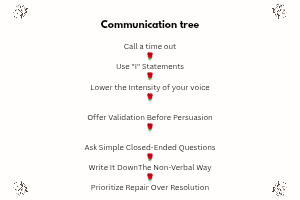
1 Call a Time-Out (The few minute Pause)
This is the single most important tool to help you communicate with your partner when they shut down during argument. As soon as you see the signs of stonewalling (slack jaw, averted gaze, silence), you need to initiate a pause, do not push harder. Then say this gently: “I see you are getting overwhelmed and I am too but I don’t want to continue this until we can both are calm. Let’s take a 20-minute break and then we will come back to this. The Science behind this is that it takes about 20 minutes for the physiological effects of flooding (the stress hormones) to subside. The pause ensures you are talking to their rational brain and not their panicked brain. This commitment to return is vital for financial intimacy.
2 Use “I” Statements
The fastest way to cause a partner to shut down is to make them feel attacked. Shift your language from accusations to personal experience. You should rephrase Your Complaint, Instead of: “You never help me, and I’m sick of it.” (Accusation) say “I feel overwhelmed when the chores aren’t finished and I need to understand how we can work together.” This technique minimizes defensiveness which is critical if you want to communicate with your partner who shuts down during arguments.
3 Lower the Intensity of your voice
If you are yelling or standing over them, your partner’s nervous system is screaming “DANGER!” The environment itself is contributing to the shutdown. For instance if the argument happened in the kitchen, you can suggest moving to the living room couch to discuss. If the volume is high, consciously lower your voice to almost a whisper. Sometimes, changing your physical position (e.g., sitting side-by-side instead of face-to-face) can instantly reduce the perceived threat, making it easier to communicate with your partner when they try to shut down during an argument.
4 Offer Validation Before Persuasion
When someone shuts down, they feel misunderstood and cornered. The secret is to open a path back to dialogue by showing empathy first, validate their Perspective even if you disagree with their actions, you can validate their feelings by saying things like: “I understand that hearing me talk about money makes you feel pressured,” or “I can see that you are frustrated right now, but please I want to hear your options on the topic.” This simple act tells your partner, “I see and care about you.” This lowers their emotional guard and makes them exponentially more likely to communicate with you during arguments.
5 Ask Simple Closed-Ended Questions
When your partner has shut down, they cannot handle a complex, open-ended discussion. Their brain needs simple data points. You have to go from open discussion to closed inquiry. Instead of saying “What do you think we should do about the budget crisis?” which will be too overwhelming and hard to process,try and say “Would you prefer to talk about this tomorrow morning or after dinner tonight?”. The goal is to get a single, low-effort response. Any response even a nod is a crack in the stonewalling this helps you to resume the process of communicating with your partner.
6: Write It Down (The Non-Verbal Way)

If verbal discussion is impossible, you can use writing to temporarily bypass the overwhelming flood response. This is a powerful, non-confrontational method. You can use letters or notes. After a time-out, suggest you both write down key points you want the other to know. Emphasize that the purpose is simply to express your own feeling without judging the other. The Benefit for the “Shutter”: The partner who shuts down often processes information better visually. Reading a calm, structured note allows them to absorb the information without the anxiety of the real-time emotional exchange. This can be a vital step to prepare them to eventually communicate well during arguments verbally.
7 Prioritize Repair Over Resolution
Not every argument needs to be “solved” in one sitting. The most important success is successfully repairing the connection after the conflict, even if the underlying issue remains. Focus on connection, not content. After a time-out, your first priority upon reconnecting should be a non-verbal repair attempt. A hug, a gentle touch or a genuine apology for your own intensity (e.g., “I’m sorry I raised my voice, that wasn’t helpful or I’m sorry I yelled at you, that pissed you off”).
The goal is to make your partner feel safe enough to return to the conversation settle out your differences. This shows that your relationship is resilient enough to handle conflict without breaking.
When to Seek Help
While these seven techniques offer immediate practical relief, it is important to recognize when stonewalling is part of a larger, systemic issue that requires professional intervention. Recognizing when stonewalling becomes abuse. It becomes tough when your partner uses silence not as an avoidance tactic, but as a deliberate weapon to control, manipulate or hurt you. If the shutdown is paired with contempt, gaslighting or an absolute refusal to ever return to the conversation, professional support is then necessary.
How a Professional Can Help You Communicate well with your partner

A trained therapist or relationship coach (especially one trained in the Gottman Method, which specifically addresses stonewalling) can help both partners. For the “Shutter”, They learn to self-soothe and recognize the physical signs of flooding before they shut down completely. For the “Pursuer”, They learn how to deliver complaints and needs in a gentle, non-threatening and effective way.
Conclusion
The cycle of pursuing and stonewalling can feel impossible to break, but you now have the tools to disrupt that pattern. Remember, your partner is not shutting you out; they are shutting down a threat. By changing the way you deliver information, you change the way their body responds. Start small, Commit to using step 1 “Call a Time-Out”the very next time you feel the tension escalating. Protect the connection and the conversation will follow. Your relationship is worth the patience and the effort required to truly communicate with your partner and stop them from shutting down during arguments.
Which of these will you try out in your relationship?
Please comment your challenges .